Ten minutes north of the store
Hillman Marsh Conservation Area
The shorebird half of a Point Pelee trip, and the reason to bring a scope.
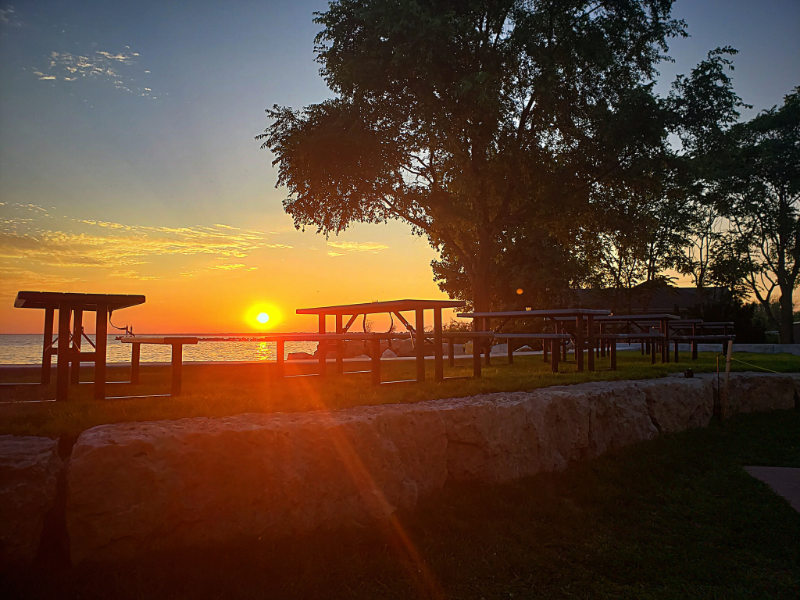
Hillman Marsh sits a few minutes north of Point Pelee and does the job the park cannot. Open mudflat, managed water levels, shorebirds standing still at range. Most birders pair it with a Pelee morning, and almost all of them wish they had brought more glass.
- Season
- Late April to early June, then again July to September
- Peak
- Mid-May for spring shorebirds, when the shorebird cell is drawn down to expose flats.
- Right now
- The longer, quieter southbound passage.
Shorebird migration at Hillman Marsh, week by week
Late April to early June, then again July to September. Mid-May for spring shorebirds, when the shorebird cell is drawn down to expose flats.
Late April – early June
Spring shorebirds on exposed flats.
What arrives
- Dunlin, Least and Semipalmated Sandpipers
- Short-billed Dowitcher, Black-bellied Plover
- Yellowlegs, both species, often side by side for comparison
- Dabbling ducks and herons through the marsh edges
What it asks of your optics
Everything is out on the flats at 80 to 200 metres, in worn or half-moulted plumage, and none of it is coming any closer. Pure reach and resolution.
- A spotting scope
This is the site that sells scopes. Shorebirds at this range are guesswork in binoculars and perfectly straightforward at 30x.
- A stable tripod
The flats are open and the wind comes straight across them. At 40x it’s the tripod underneath that decides what you can see, not the glass on top of it.
July – September
Happening nowThe longer, quieter southbound passage.
What arrives
- Adult shorebirds moving south from early July
- Juveniles following through August and September
- Pectoral and Stilt Sandpipers, godwits in some years
- Egrets and herons concentrating as water drops
What it asks of your optics
A longer season with far fewer people than May, though heat shimmer off the flats usually puts an end to serious looking by late morning.
- Quality scope glass
Heat shimmer is brutal on cheap glass. Better optics buy you usable magnification for maybe an extra hour either side of midday, which is often the difference between a day list and a wasted drive.
- A digiscoping adapter
Juvenile shorebirds are the ones you want to photograph and puzzle out later. A phone adapter on the scope is the cheapest way to do it.
Hillman Marsh sightings, as they happen
A short email whenever something worth driving for turns up, for the rest of the season. We will not send you a catalogue or a daily digest.
One email a week in season. Unsubscribe any time.
Worth reading next
- The Top Spotting Scopes for Bird Watching
What we recommend for exactly this kind of long range shorebird work.
- How to Choose the Right Tripod for Your Spotting Scope
On open flats it is the tripod that decides what the scope can do.